The Prep Work That Makes Paint Last on a Waterfront Home
When most people think about painting a house, they picture brushes and rollers. But the truth is, the prep work is where a lasting paint job is won or lost — and on a waterfront home, that prep work matters even more.
Here's exactly what we do before a single drop of paint goes on.
Pressure Washing
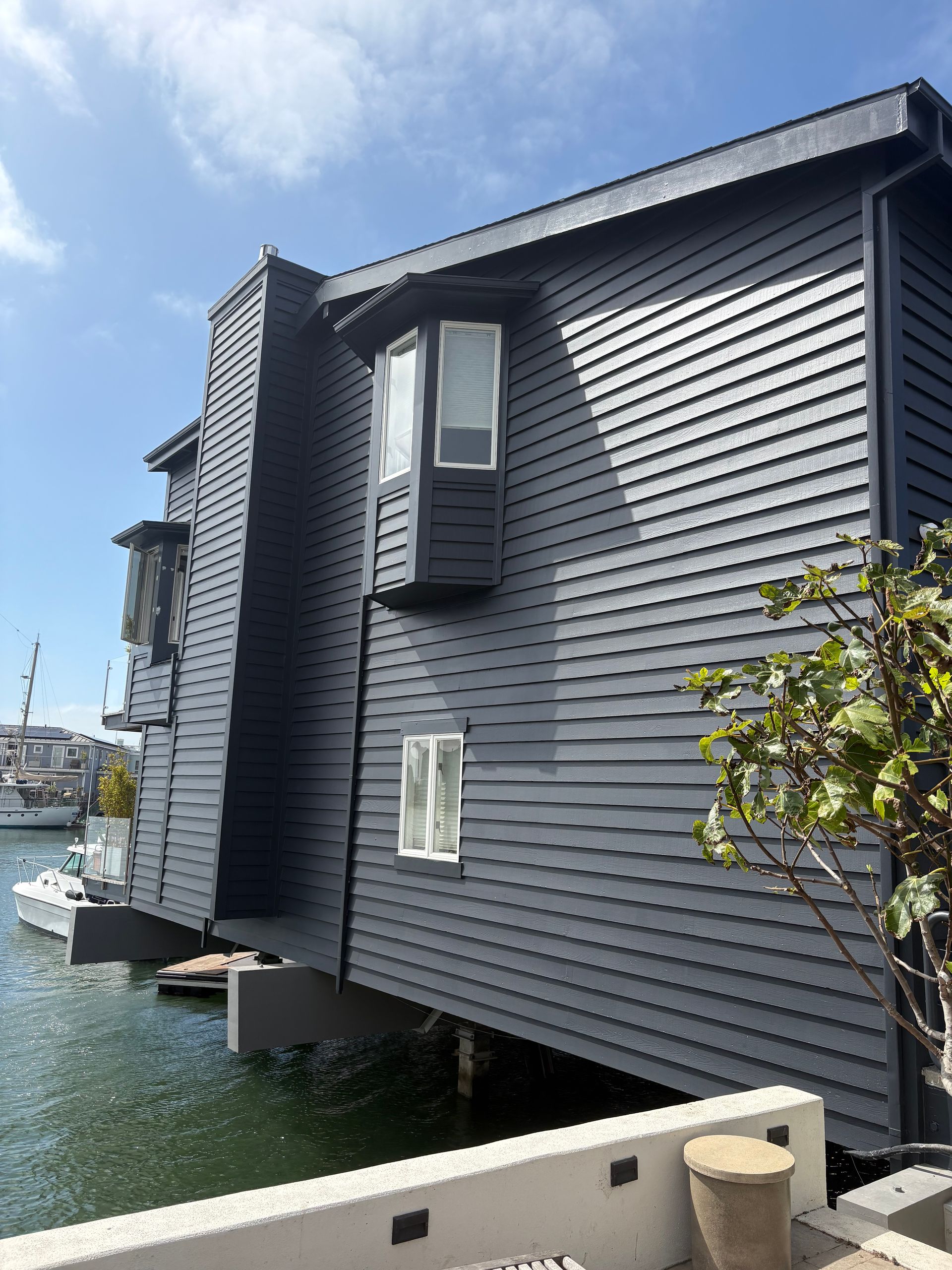
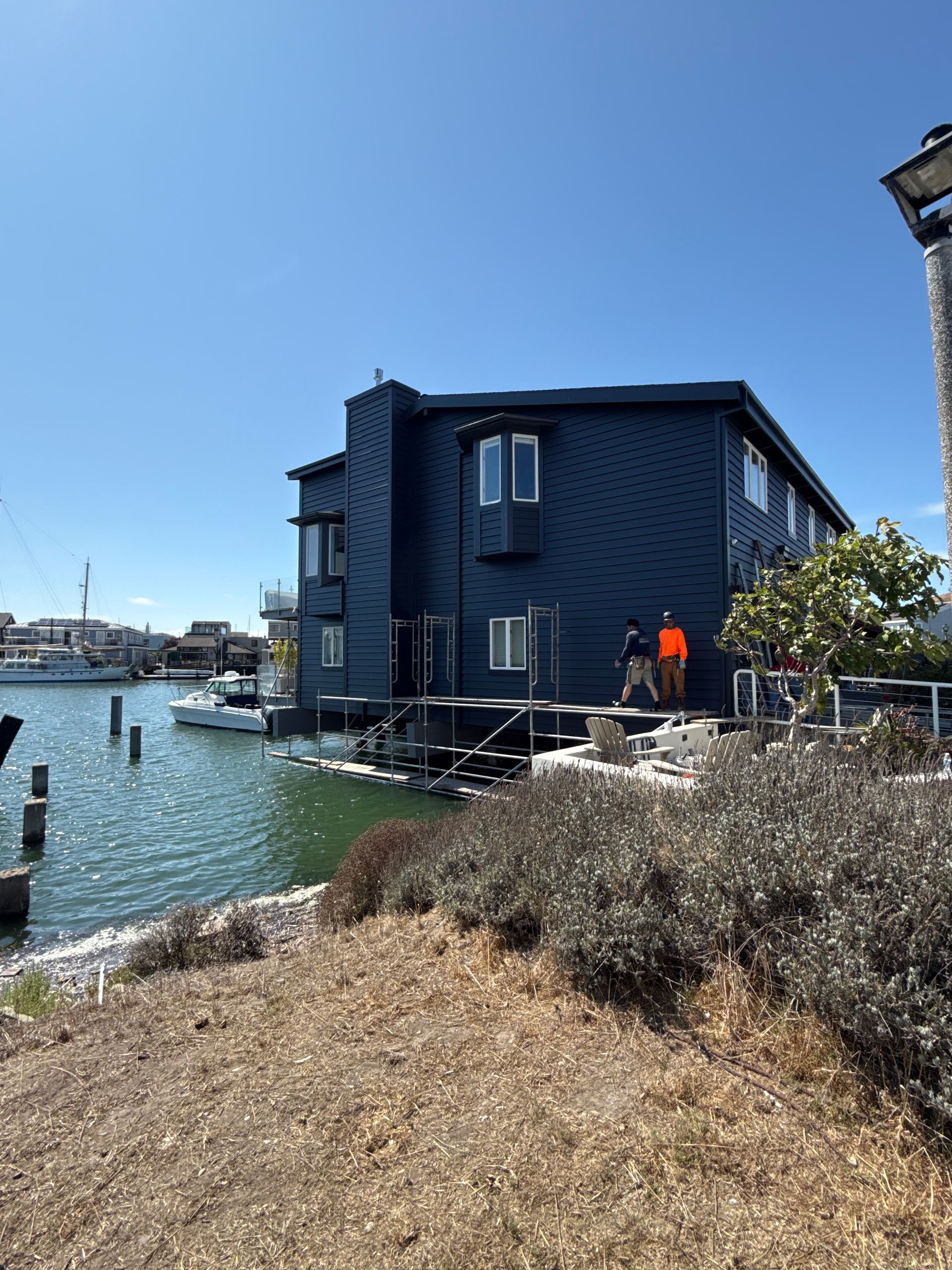
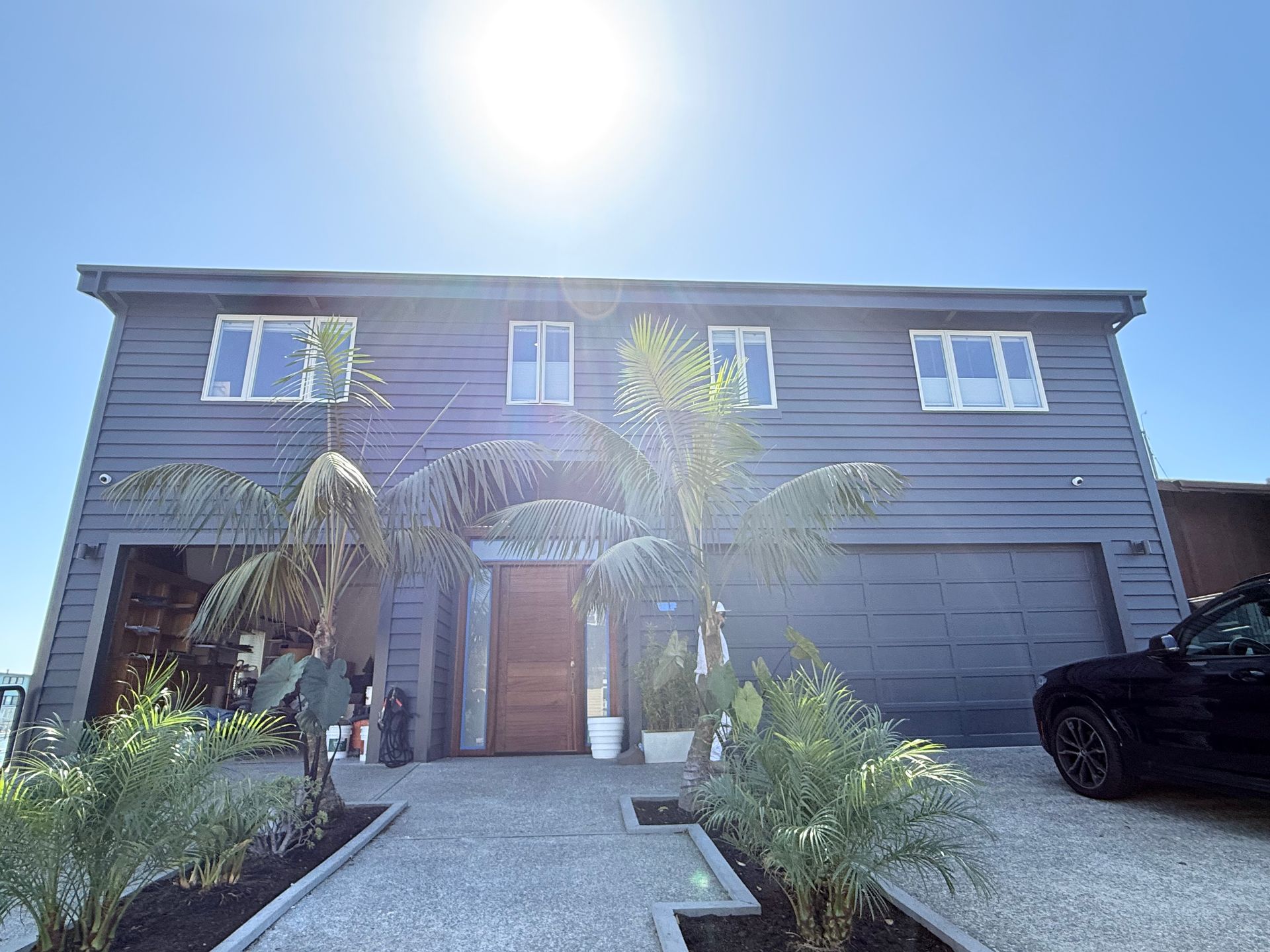
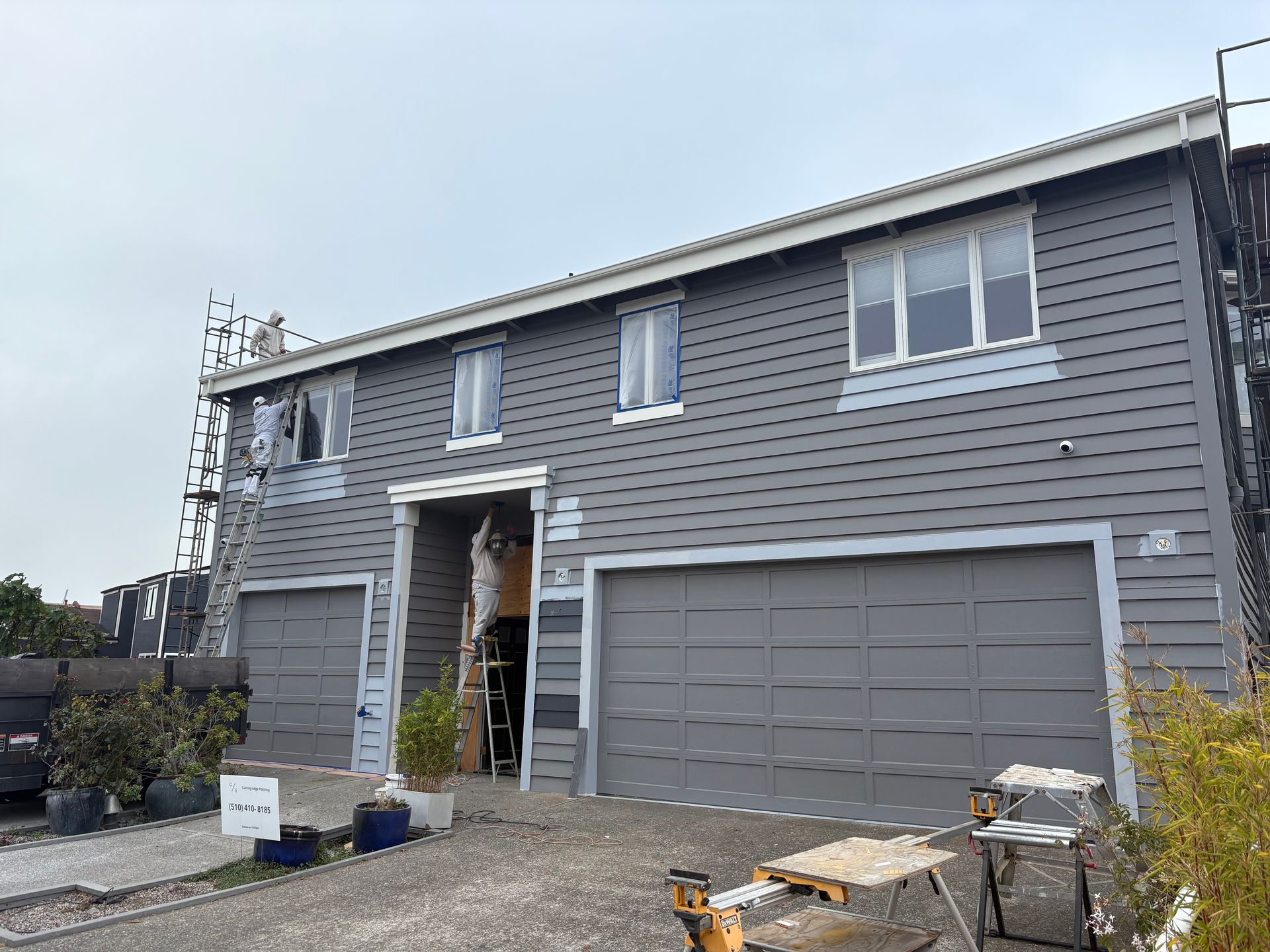
The first step once the scaffolding is in place is pressure washing all the surfaces. Houses collect dirt and cobwebs over time, and on a waterfront home like this one in Point Richmond, California, there's a significant amount of salt sitting on the exterior from the SF Bay Area water. We want to pressure wash all of that clean so we have a good working surface to begin with.

Identifying Trouble Areas
From there, we go around and pinpoint all the trouble areas — whether it's rotted wood or areas that need more attention during prep. We make note of specific spots and what will be required to make them weather tight.
Sanding, Caulking, and Patchwork
We begin the prep process by doing a light sanding on a lot of the surfaces. This agitates the surface and opens the pores so that when we apply new products, they bond properly. We then do caulking and patchwork to seal any gaps, so the finished product has a solid weather barrier and is protected from any intrusion into the house.
Repairing Water-Damaged Wood
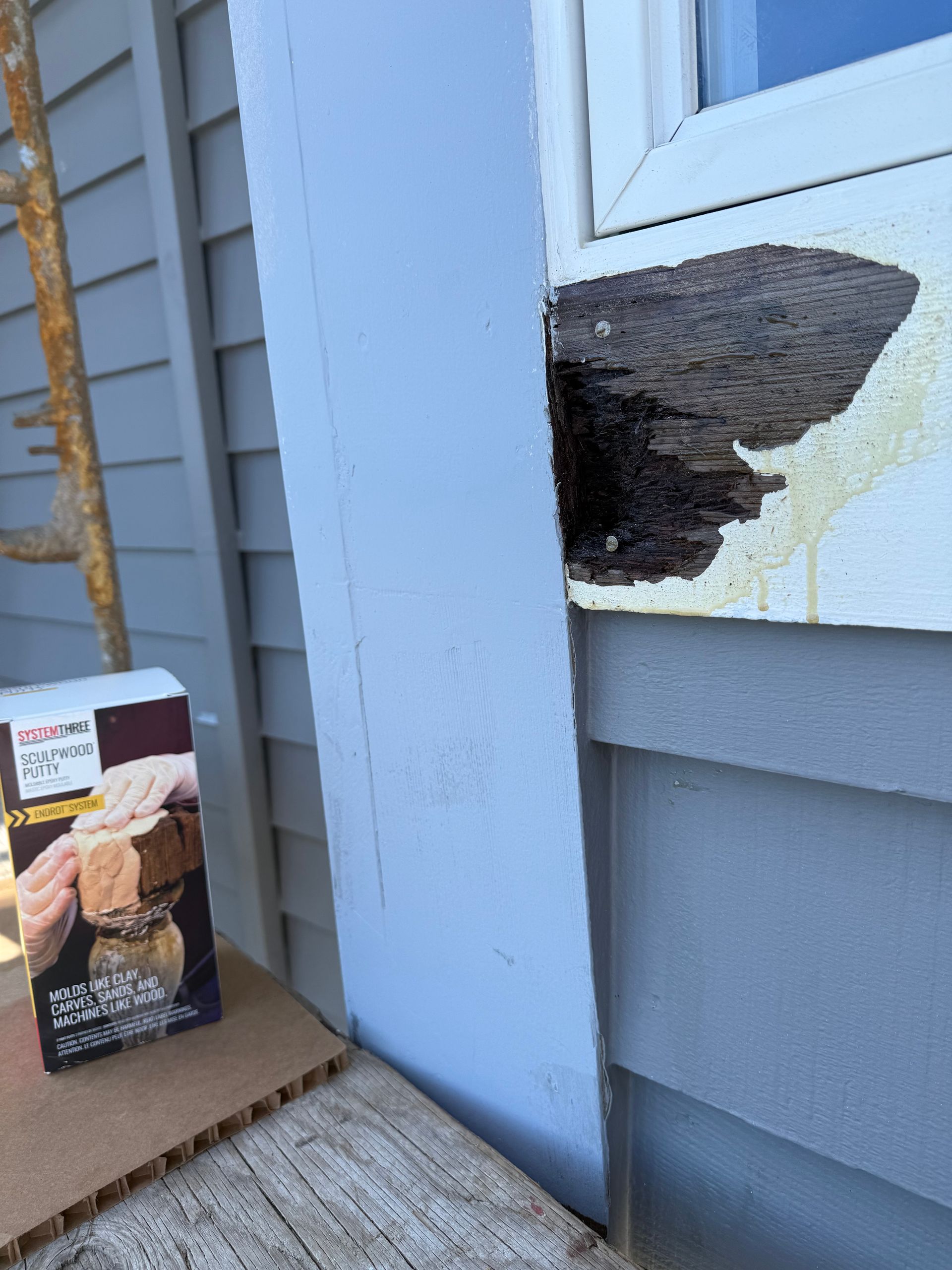
On this project, we found a couple of areas where water had intruded into the wood, creating soft spots. Here's what we do:
- We dig those areas out and let them dry.
- We apply a two-part epoxy liquid to penetrate the wood. The epoxy cuts off the rot from spreading further and strengthens the wood.
- We let that dry over the course of about a day.
- We then apply a two-part epoxy filler to fill in the damaged surfaces and flush them out.
- After letting that dry for about 24 hours, we sand it down to smooth the area and clean the surface of dust.
Priming
Priming is a key part of protecting the work that has been done. Priming encapsulates the area and creates a surface for the new coating system to bond. By using this method, the damaged areas will now last an incredible amount of time and hold strong to the surface.
Masking
Finally, we mask the windows, door hardware, and ground cover, and cover any plants — making sure those areas stay clean throughout the process.
With everything prepped and protected, we're ready for the painting portion.
In Part 3, we'll cover the paint system we chose for a salt-air environment, the spray and back-roll technique that gives us a uniform finish, and how we handle the final walk-through with the homeowner.