Paint, Finish, and Walk-Through: Completing a Waterfront Exterior Project

Chad Feagley • April 16, 2026

Share this article

With the prep work complete and every surface primed and ready, it's time for the part most people think about first — the painting. But even here, there's a method behind every decision we make. The products we choose, the way of applying them, the number of coats used, and systems before the actual paint all play a role in how the finished project will look and how well it will perform over time.

Choosing the Right Paint System for a Waterfront Home

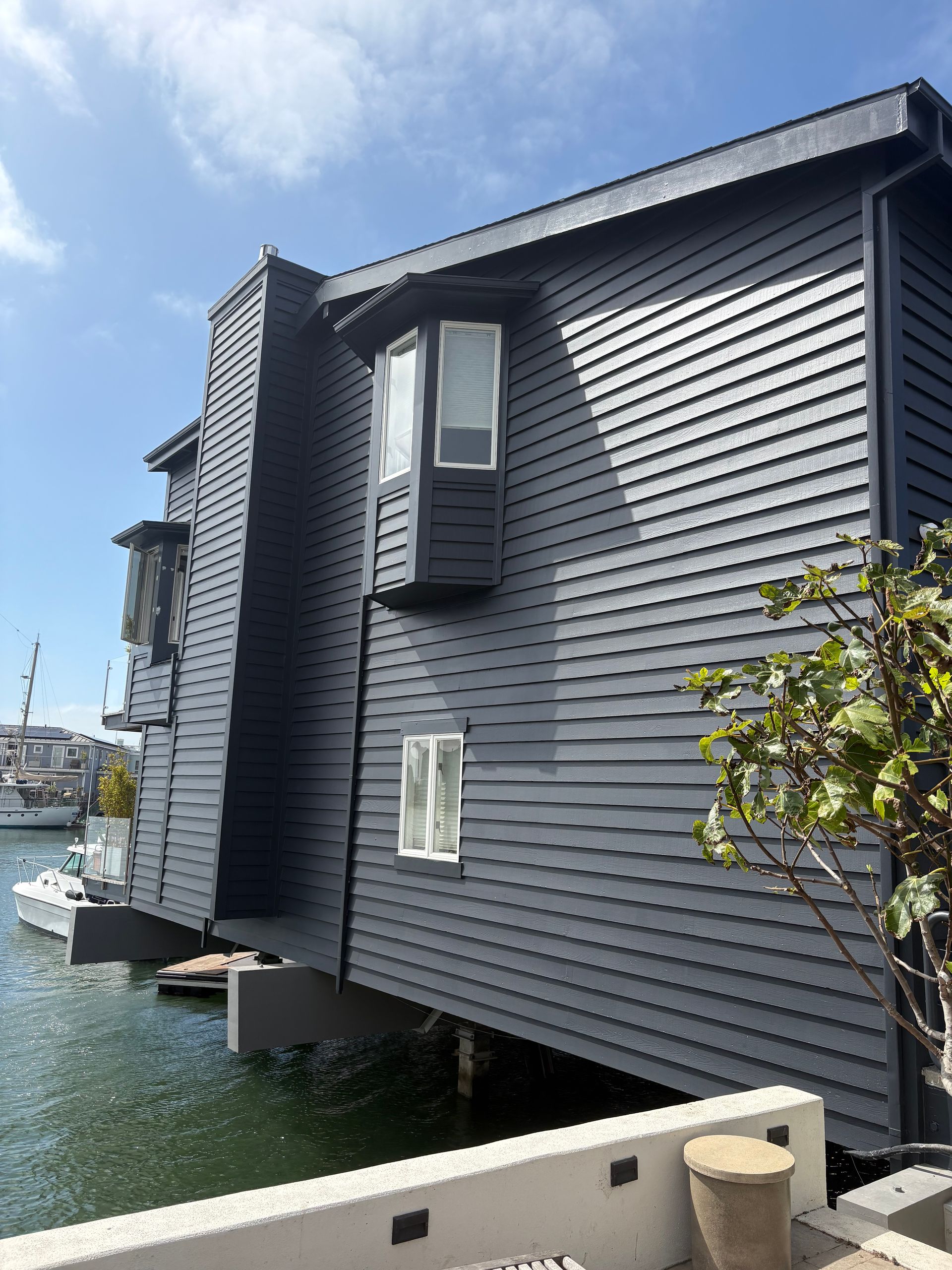
Before we start, we take into consideration the environment of the home and the specific painting system that should be used. This house is located in Point Richmond, California, and it sits on the water, so we want a product that can hold up well to a lot of weather and a lot of salt coming off the water.


Waterfront homes experience conditions that can be rather harder on exterior coatings than homes located farther inland. Moisture, wind, temperature changes, salt in the air, and dirt all contribute to how quickly an exterior coating can break down. Product selection is just as important in any of the steps being taken.


We talk to our paint representatives for their advice and give them all the information about the location of the home and the substrates we’re working with. This allows us to determine the best product and system for the specific conditions of the project. There isn’t always one paint product that is right for every house. The location, substrate, existing coating, color change, exposure, and desired appearance all need to be considered.


For this project, we recommended a low-sheen paint for the main body. That might go against the norm — typically you'd use flat for an exterior body and semi-gloss for trim — but for SF Bay Area waterfront homes like this one, weather protection is the priority.


In this environment, there's a lot of moisture, and having the weather fall off the exterior is critical to protecting the surfaces long-term. Applying a low sheen on the body allows the paint to fight off the buildup of weather and dirt so the finish can look great for years to come. With the decision to use a low-sheen paint for the body, it is imperative to have solid prep that creates a smooth surface, as the low sheen will highlight any imperfections not addressed on the house. The sun hits the house, reflects off the low sheen, and shows any glaring errors in the body.


This is one of those projects where the quality of the final paint job is determined long before the paint is ever applied. Having conversations and relationships with our paint stores gives us an edge, knowing that we’re providing the very best.

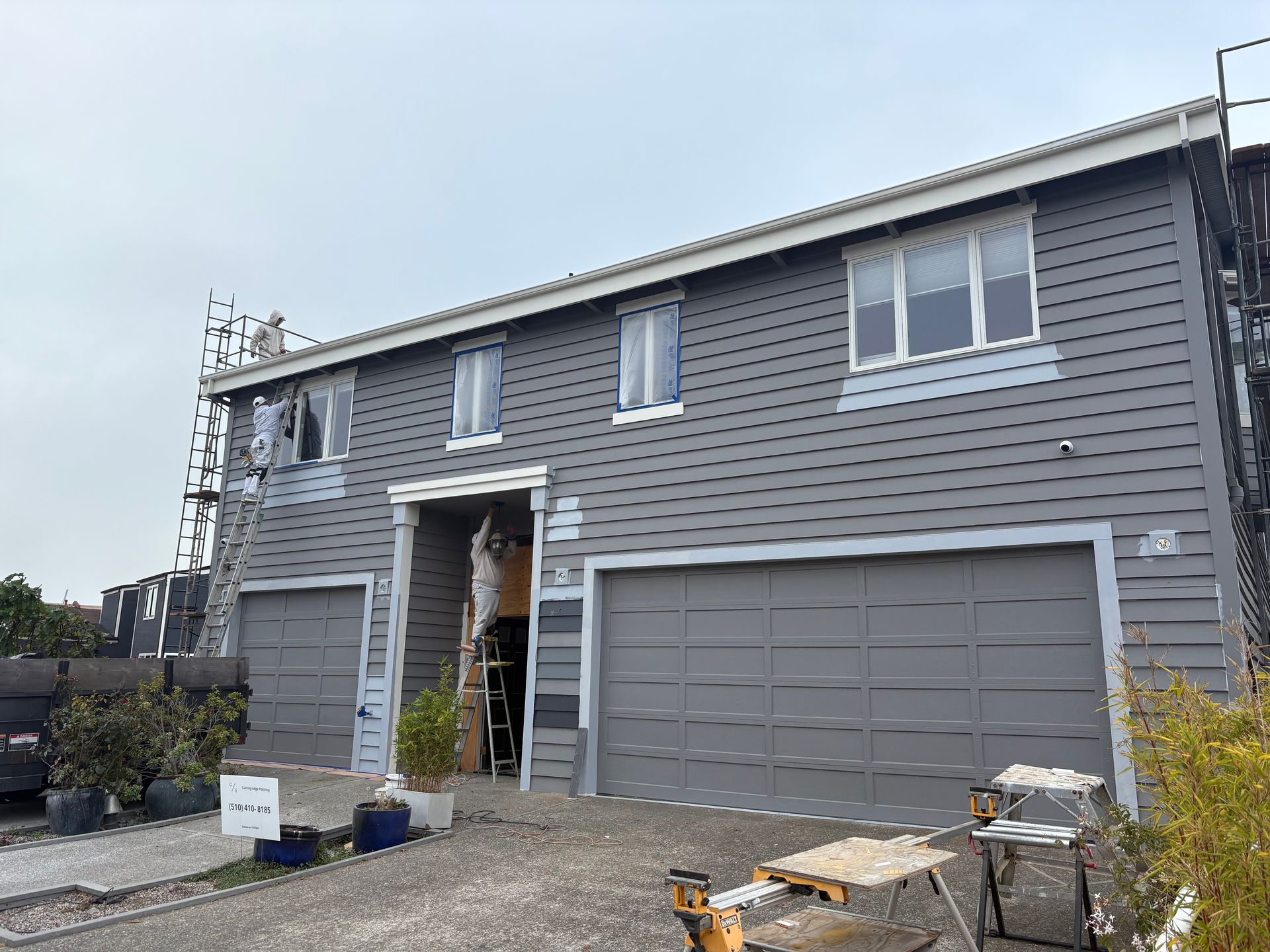
Gray two-story house with new siding, garage doors, and construction materials in the driveway

Applying the Paint

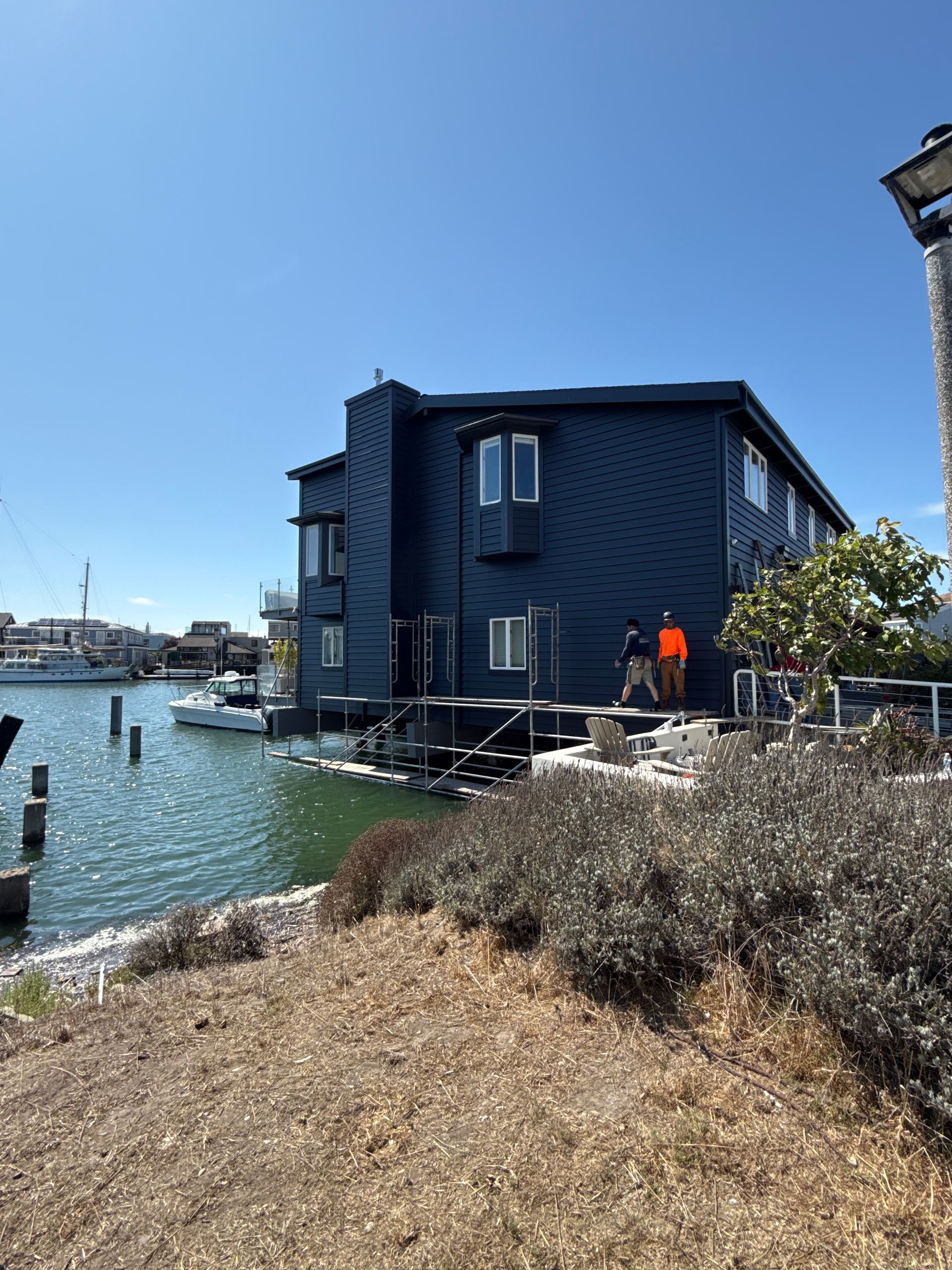
We used the low-sheen paint and applied two coats, since we were converting the color from a medium gray to a dark bluish-black. Applying two coats protects the exterior better and allows the true color to show.


Here's how we apply it:


First coat: We spray onto the surface. Using the correct tip to evenly coat the surface and make sure all areas are covered accurately.


Second coat: We spray, using the same process, but then back-roll into the surface. Back-rolling allows the paint to penetrate inside the surface, creating a seal on top and a more uniform look.


If you only applied a spray application, you'd end up with lap lines on the exterior body and an uneven finish. This two-step process gives the exterior colors a uniform and longer-lasting finish. Also allowing the surfaces to be touched up more easily now and in future moments. Only spraying means you can only touch up by spraying, but by back-rolling the surfaces, we ensure that we create an easy finish to touch up if needed. It’s an extra step but really pays off for any future work.

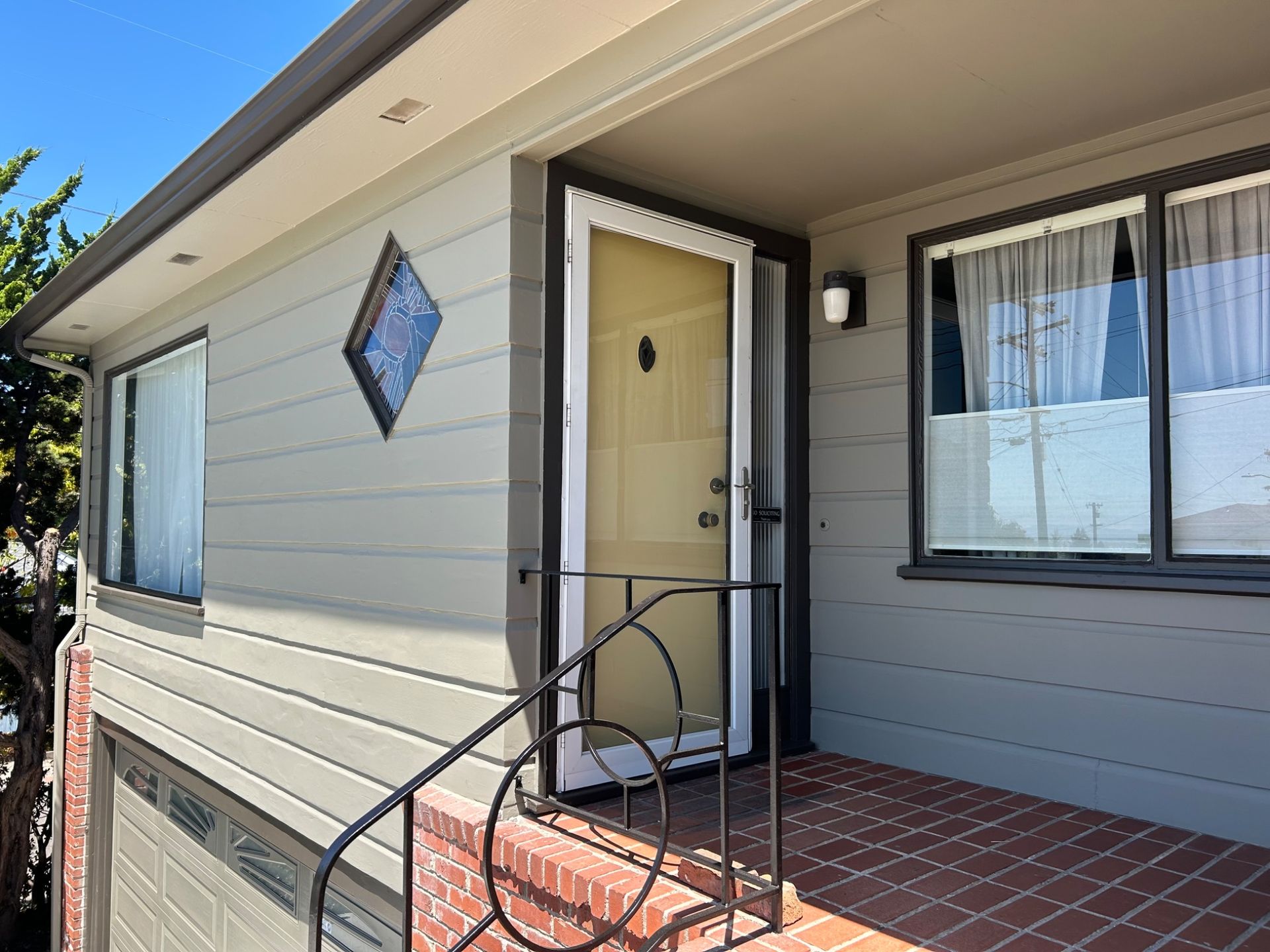
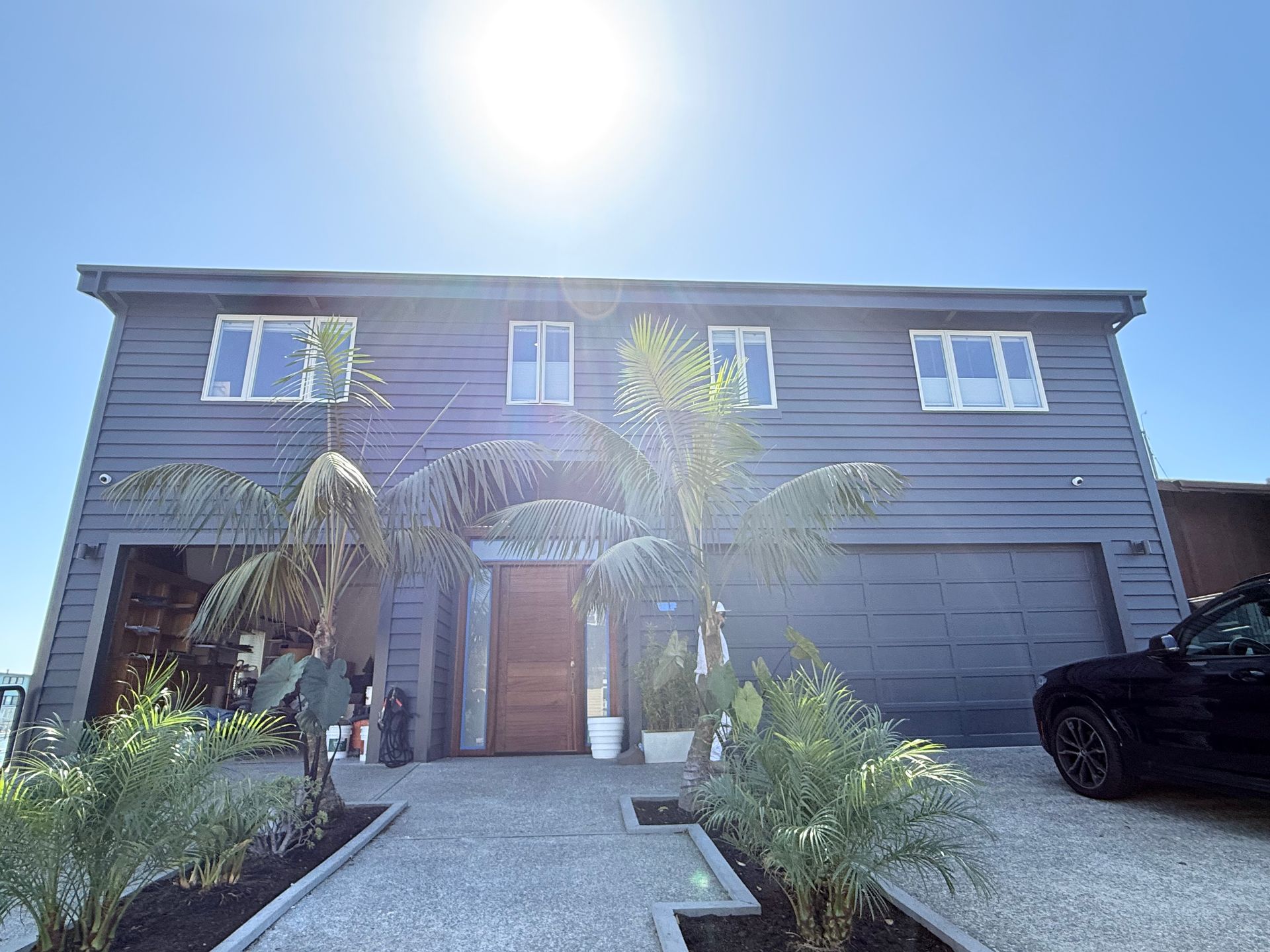
Two-story gray house with front walkway, palm trees, and garage under bright sunlight

Trim, Garage Doors, and Details

Onto the trim — same color, but we step up the sheen level to create contrast between the body and the trim. We apply two coats to all the trim, garage doors, metal railing, and detail designs. We applied this by roller and brush. It was not necessary to spray since the trim color is the same as the body, with just a sheen jump. This way, we can make every line clean, giving the finish a crisp look.

Scaffolding Removal and Patching

There is a system to every part of a job, especially timing when dealing with scaffolding. While working on the house, we complete the scaffold sides first so we can let the scaffold company know it's ready to come down. When they come to remove the scaffolding, there are holes left behind from where it was drilled into the house for stability. We want to make sure we're on site when that happens.


As they drop the scaffolding level by level, we go up and patch the holes, prime them, and finish painting them — so everything is protected, and nothing is left undone. This is a crucial step, especially for a project with very limited access to certain sides of the house. Being able to be there at the time of removal ensures completion of every inch.

Dark blue houseboat on a canal beside a dock, with a person in an orange jacket under a clear sky.

The Final Walk-Through

Once the site is cleaned up, we walk around with the homeowner. We check for any touch-ups or items that need attention. If anything comes up, we take care of it on the spot. Giving the clients peace of mind and confidence that their home has been looked over thoroughly and not accepting any hidden surprises. We love this part of the project, as showing our clients are attention to detail is one of the traits we hold extremely high.


That's a completed painting project — and a happy homeowner. This is just one project we've done at Cutting Edge Painting. We enjoy each project we face, as they all present unique challenges, but those turn into unique opportunities to demonstrate what we can accomplish with our knowledge amd skillset. We do many more like it, and we would love to do yours. Contact us today to get started.

Recent Posts

Front porch of a gray Victorian house with white trim and decorative columns
By Chad Feagley June 8, 2026
See how Cutting Edge Painting matched century-old stained wood on new baseboards during a historic 1929 MacGregor home restoration
Person painting a white wall with a long-handled roller on a ladder
By Chad Feagley June 8, 2026
See how Cutting Edge Painting tackled a full interior repaint of a 1929 Albany home
By Chad Feagley May 7, 2026
Choosing the right exterior paint colors means balancing aesthetics, materials, and architecture. Cutting Edge Painting serves El Cerrito, Rockridge, Alameda, Richmond, and the East Bay Area.
Bright kitchen with white cabinets, dining table, and arched doorway under warm ceiling lights
By Chad Feagley April 30, 2026
Learn how to choose interior paint colors that tell a story in your home.
Elegant living room with wooden furniture, patterned rugs, fireplace, and tall windows with curtains.
By Chad Feagley April 23, 2026
Discover how color shapes emotion, mood, and experience — and how Cutting Edge Painting helps East Bay homeowners find the perfect palette with a professional colorist.
Dark gray waterfront building with bay windows and water below a bright sky
By Chad Feagley April 10, 2026
Cutting Edge Painting walks through the full exterior prep process on a waterfront home in Point Richmond, CA
Two-story gray house with front walkway, palm trees, and garage under bright sunlight
By Chad Feagley April 3, 2026
See how Cutting Edge Painting handles a exterior project for waterfront home in Point Richmond, California from the first walkthrough to scaffolding setup.